
Cryptology, etymologically the "science of secrecy", can only really be considered a science quite recently. It encompasses cryptography - secret writing - and cryptanalysis - the analysis of the latter. - source: Wikipedia
Cryptology is an ancient art and a new science: an ancient art because the Spartans already used it with the scytale; a new science because it has only been a topic of academic and university scientific research since the 1970s.
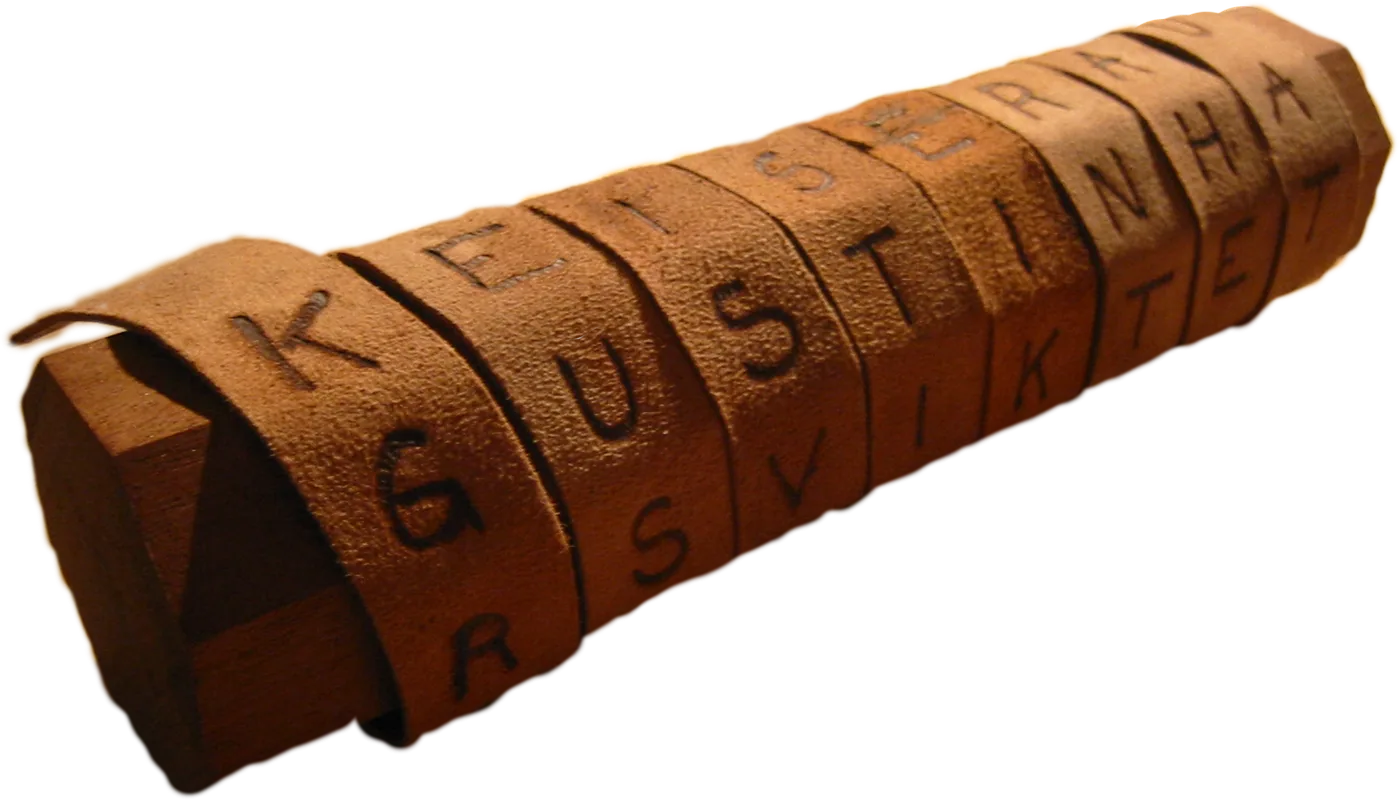
Scytale or staff of Plutarch - One of the oldest known military devices
History
The first encryption methods go back to Antiquity and improved considerably, with the manufacture of various encryption machines, to take on a major role during the First World War and the Second World War.
The art of cryptology is considered to have been born with the art of writing. As civilizations evolved, human beings organized themselves into tribes, groups and kingdoms. This led to the emergence of ideas such as power, battles, supremacy and politics. These ideas further fueled people's natural need to communicate secretly with a selective recipient, which also ensured the continued evolution of the field.
The roots of cryptology are found in the Roman and Egyptian civilizations.
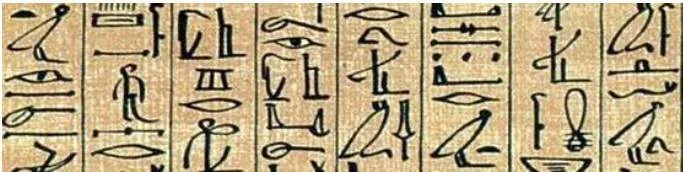
Hieroglyph - The oldest cryptographic technique
The first known evidence can be attributed to the use of the "hieroglyph". About 4000 years ago, the Egyptians communicated through messages written in hieroglyphs. This code was the secret known only to the scribes who transmitted messages on behalf of the kings. One of these hieroglyphs is illustrated below.
Later, scholars moved on to the use of simple mono-alphabetic substitution ciphers between 500 and 600 BC. This involved replacing the alphabets of a message with other alphabets according to a secret rule. This rule became a key for recovering the message from the scrambled message.
The earlier Roman cryptography method, popularly known as the Caesar Shift Cipher, relies on shifting the letters of a message by an agreed number (three was a common choice); the recipient of that message would then shift the letters by the same number and obtain the original message.
The Lorenz machine, for example, was used to encrypt high-importance German military communications during the Second World War. The cryptanalysts of Bletchley Park managed to break its code.
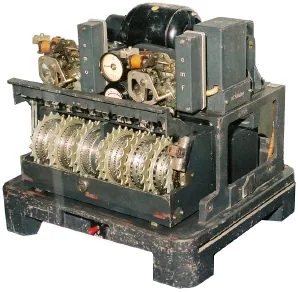
Lorenz machine SZ 40/42
Cryptography splits into two clearly differentiated parts:
- on the one hand secret-key cryptography, also called symmetric or classical.
- on the other hand public-key cryptography, also known as asymmetric or modern.
The first is the oldest, and can be traced back to the Egypt of the year 2000 BC and on through Julius Caesar. The second goes back to an article by W. Diffie and M. Hellman, New directions in cryptography dated 1976.
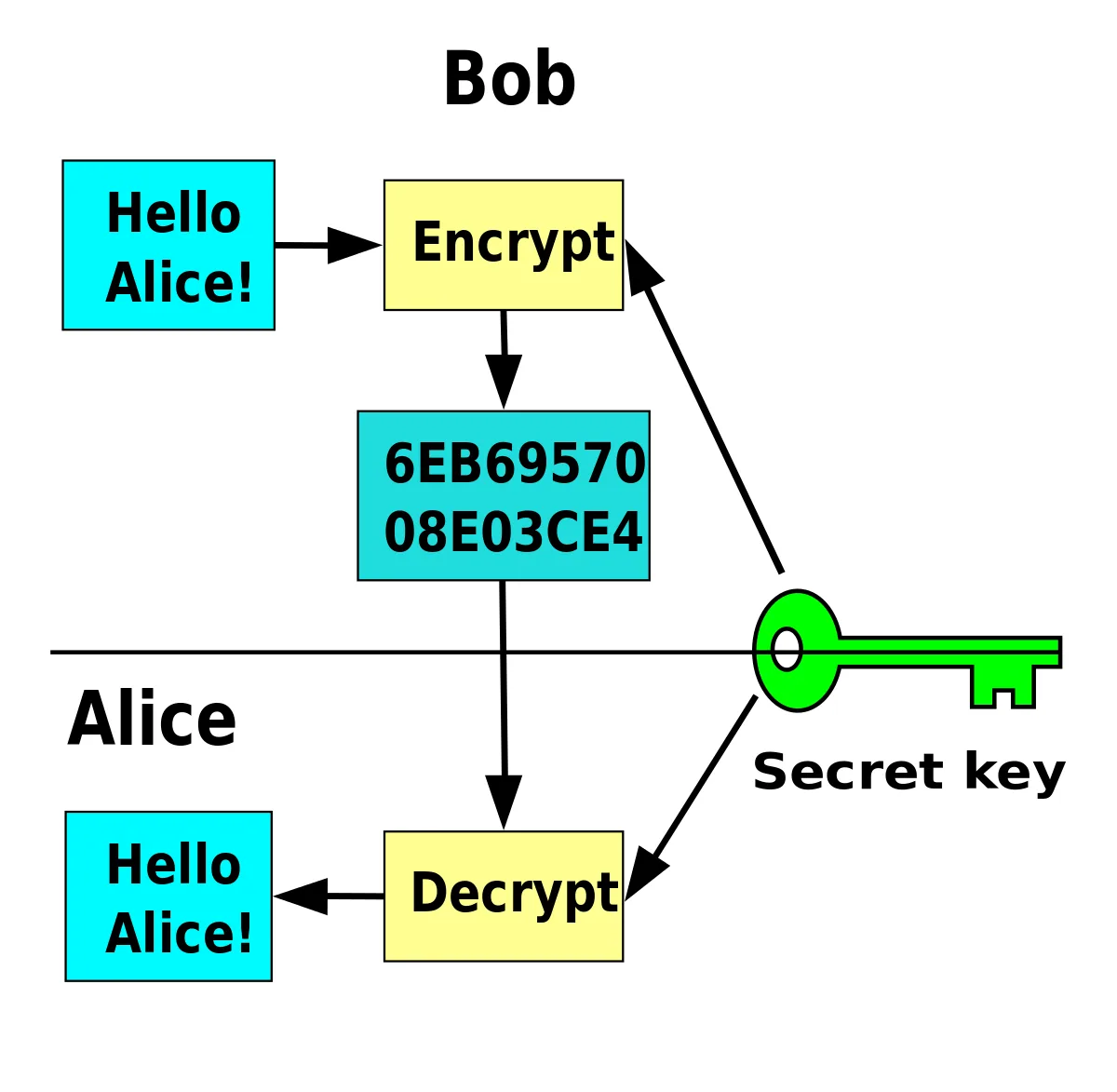
Symmetric cryptography
Both aim to ensure the confidentiality of information, but secret-key cryptography requires beforehand the sharing between recipients of a certain piece of information: the (symmetric) key, necessary for the encryption as well as the decryption of the messages. With public-key cryptography, this is no longer necessary. The keys are then different, and serve to carry out opposite operations, hence the asymmetry between the encryption and decryption operations.
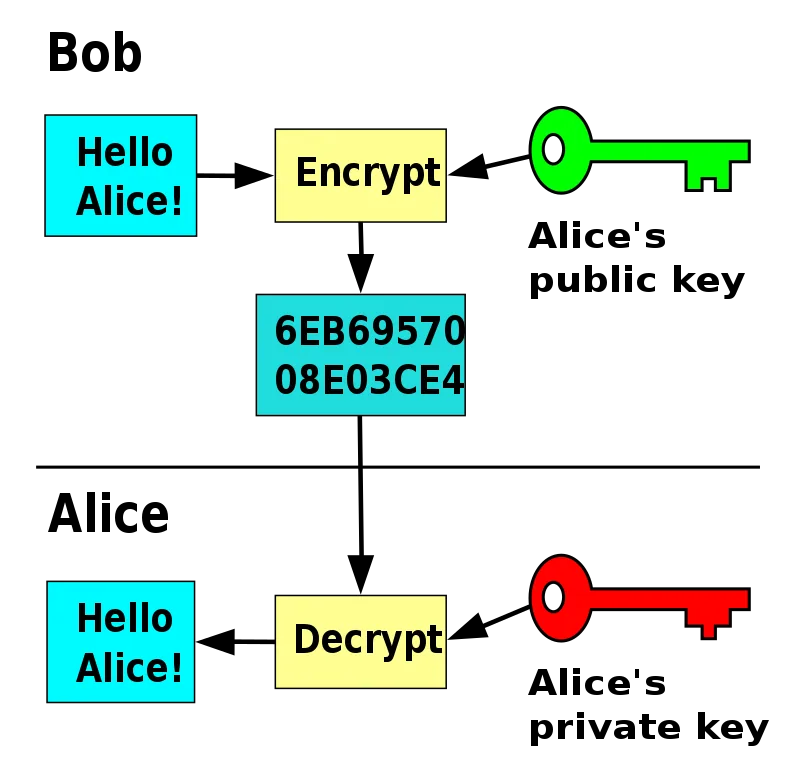
Asymmetric cryptography
Cryptanalysis is the technique that consists of deducing a plaintext from a ciphertext without possessing the encryption key. Obviously, ever since the existence of these secret codes, people have sought to break them, to understand encrypted messages even though they are not the legitimate recipient, in other words to decrypt. If the cryptanalysis of the Caesar system is easy (a clue: the statistical properties of the language, in French, e is the most frequent letter), much more resistant systems have appeared.
Some resisted for a long time; that of Vigenère (Le traité des secrètes manières d'écrire 1586) for example, was only broken by Charles Babbage in the middle of the 19th century. Others, although not having an exploitable flaw, are no longer used because they are within reach of modern computing power. This is the case of DES with its 56-bit key deemed too short because it can be found by exhaustive search (by brute force).
The Bombe was an electromechanical device used by British cryptologists to help decipher secret German messages.
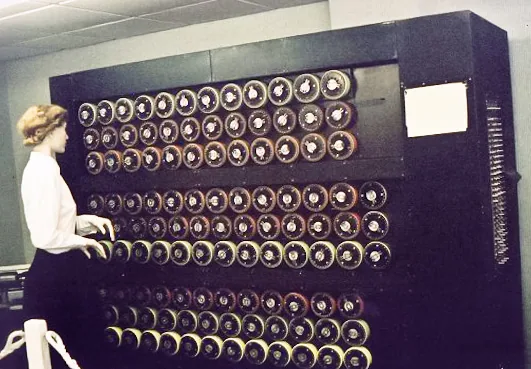
The Bombe of Bletchley Park
It reproduced the action of several Enigma machines wired together. Each of the fast-rotating drums, illustrated above in a model from the Bletchley Park museum, simulated the action of an Enigma rotor.
We can mention a few modern cryptanalysis techniques:
- differential cryptanalysis, Biham and Shamir, 1991, applicable to iterative block ciphers, stream ciphers and hash functions.
- linear cryptanalysis, Matsui, 1994, developed to break the symmetric encryption algorithm DES.
- factorization, the only real way to decrypt RSA at present.
- brute force, that is to say the systematic trial of all possible keys.
The concepts around cryptanalysis are highly specialized and complex which is why we will cover them very briefly.
In order for data to be secure during storage or transmission, it must be transformed in such a way that it would be difficult for an unauthorized person to be able to discover its true meaning. To do this, security systems and software use certain mathematical equations that are very difficult to solve unless strict criteria are met. The level of difficulty of solving a given equation is known as intractability. These equations form the basis of cryptography.
To give a description of cryptanalysis, you would almost have to review each system — not only each system, but also each implementation: what use is the best armored door if the wall that holds it up is made of plywood?
You have surely heard of the CIA model for confidentiality, integrity and availability (Confidentiality, Integrity, Availability), which is a key principle of information security within a company.
Confidentiality refers to a set of rules that restricts access to information. Integrity as the assurance that the information is reliable and accurate. And availability as the guarantee that authorized people benefit from reliable access to the data.
As for cryptology, confidentiality is only one of the facets. It also enables:
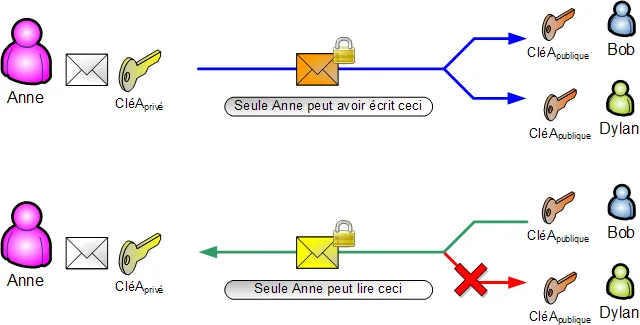
- authentication or strong authentication of a message: the assurance that an individual really is the author of the encrypted message;
- non-repudiation is the fact of ensuring that a contract cannot be called into question by one of the parties;
- integrity: it is possible to verify that the message has not been manipulated without authorization or by mistake;
- the zero-knowledge proof — of identity for example —, one can prove that one knows a secret without revealing it;
Essentially, it is public-key cryptography that provides the necessary foundations for these aspects of cryptology.
See you soon!