
Computer security is a set of cybersecurity strategies that prevents unauthorized access to the digital assets of an organization or of private individuals, such as computers, networks and data. It preserves the integrity and confidentiality of sensitive information, blocking access by sophisticated attackers.
Cybersecurity consists in protecting systems, networks and programs against digital attacks. These generally aim to access, alter or destroy sensitive information; to extort money from users; or to interrupt normal business processes.
Putting effective cybersecurity measures in place is a real challenge today, because there are more devices than people and attackers are ever more numerous and inventive. Do not wait any longer, join the good side of the force!

Types of computer security
Network security
Network security is used to prevent unauthorized or malicious users from entering your network. It ensures that usability, reliability and integrity are not compromised. This type of security is needed to prevent an attacker from accessing the data inside the network. It also prevents them from adversely affecting the ability of your users to access or use the network.
Network security has become more and more difficult as companies increase the number of endpoints and move their services to the public cloud.
Internet security
Internet security involves protecting the information sent and received in browsers, as well as the network security involved in web applications. These protections are designed to monitor incoming Internet traffic for malicious software and unwanted traffic. This protection can take the form of firewalls, antimalware and antispyware.
Endpoint security
Endpoint security provides protection at device level. The devices that can be secured by endpoint security include mobile phones, tablets, laptops and desktop computers. Endpoint security will prevent your devices from accessing malicious networks that could be a threat to your organization. Malware protection software and device management software are examples of endpoint security.
Cloud security
Applications and data are moving to the cloud, which means that users connect directly to the Internet and are not protected by the traditional security stack. Cloud security helps to secure the use of SaaS (Software-as-a-Service) applications and of the public cloud, for example.
Application security
With application security, applications are specifically coded when they are built to be as secure as possible, in order to ensure that they are not vulnerable to attacks. This additional layer of security consists in reviewing the code of an application and identifying the vulnerabilities that may exist in the software.
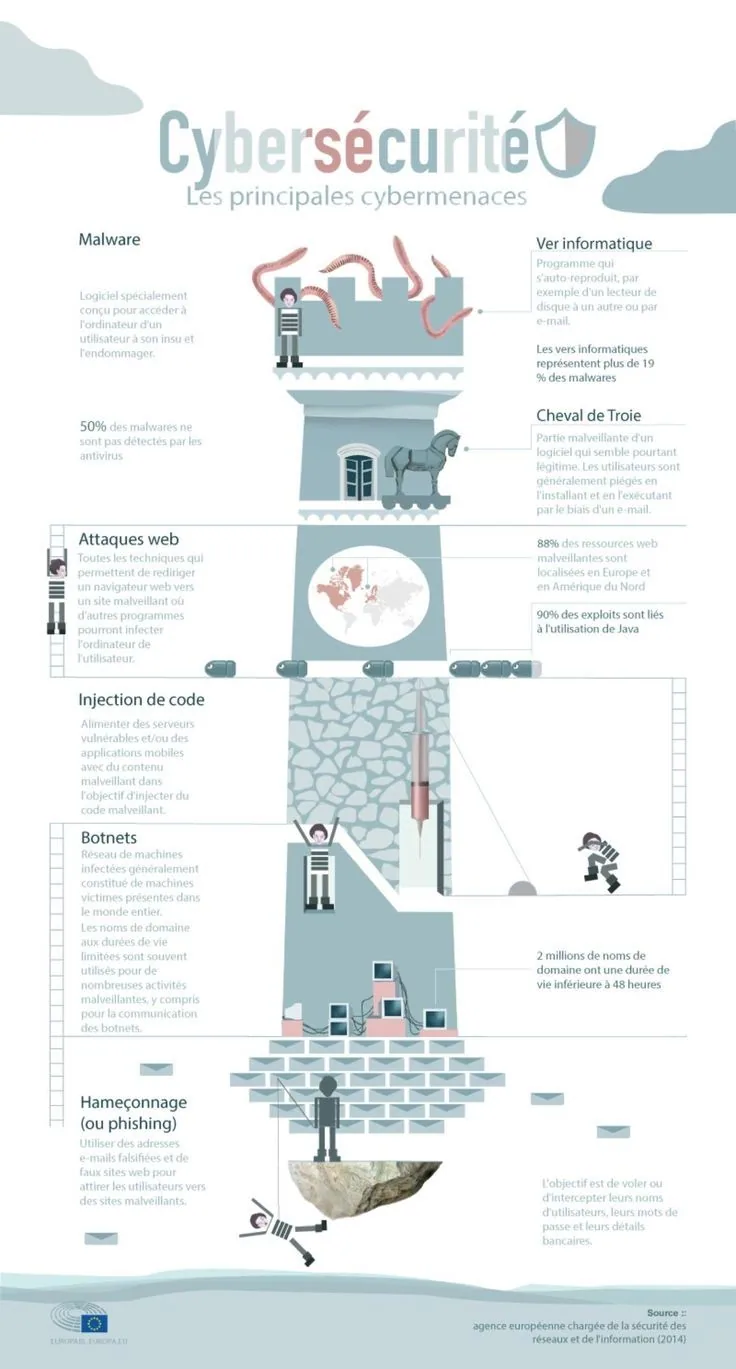
The most common types of malicious software
Virus
Viruses are designed to damage the target computer or device by corrupting data, reformatting your hard disk or shutting your system down completely. They can also be used to steal information, damage computers and networks, create botnets, steal money, display advertising, and so on.
Computer viruses require human action to infect computers and mobile devices, and they often spread through email attachments and Internet downloads.
Worm
One of the most common types of malicious software, worms spread across computer networks by exploiting operating system vulnerabilities. A worm is a standalone program that replicates itself to infect other computers, without requiring action from anyone.
Because they can spread quickly, worms are often used to run a payload - a piece of code created to damage a system. Payloads can delete files on a host system, encrypt data for a ransomware attack, steal information, delete files and create botnets.
Trojan horse
A Trojan horse, or "trojan", enters your system in the form of a normal, harmless file or program designed to trick you into downloading and installing malicious software. As soon as you install a Trojan horse, you give cybercriminals access to your system. Through the Trojan horse, the cybercriminal can steal data, install more malicious software, modify files, monitor user activity, destroy data, steal financial information, carry out denial of service (DoS) attacks on targeted web addresses, and so on. Trojan horse malware cannot replicate on its own; however, when it is combined with a worm, the damage that Trojan horses can cause to users and systems is endless.
Spyware
Installed on your computer without your knowledge, spyware is designed to track your browsing habits and your activity on the Internet. Spying capabilities can include monitoring activity, collecting keystrokes and gathering information about accounts, logins, financial data, and so on. Spyware can spread by exploiting software vulnerabilities, by being bundled with legitimate software, or inside Trojan horses.
Adware
Adware is often known as aggressive advertising software that puts unwanted advertising on your computer screen. Malicious advertising software can collect data about you, redirect you to advertising sites and change the settings of your Internet browser, your default browser and your search settings, as well as your home page. You usually pick up advertising software through a browser vulnerability. Legitimate advertising software exists, but it will first ask for your permission before collecting data about you.
Ransomware
Ransomware brings in so much money for cybercriminals that it is the type of malicious software we hear about the most.
Ransomware is a type of malicious software that holds your data hostage and demands a payment to give it back to you. It restricts user access to the computer by encrypting the files on the hard disk or by locking the system and displaying messages meant to force the user to pay the attacker so that the restrictions are lifted and access to the computer is restored. Once the attacker has been paid, your system and your data usually (but not always) return to their original state.
The main skills to work on
Networking
Understanding, enumerating and attacking various network services in real environments.
Web hacking
Understanding the main security issues of web applications and learning to exploit them with industry tools and techniques.
Cryptography
Cryptography is essential to security.
Finding out how it is used to preserve the integrity and confidentiality of sensitive information.
Linux
Many servers and security tools use Linux.
Learning to use the Linux operating system is an essential skill in cybersecurity.
Windows
Understanding the fundamentals of the main Windows concepts and the vulnerabilities of Active Directory.
Privilege escalation
After gaining initial access on a machine, finding out how to raise the privileges of the account to root.
Threat and vulnerability management
Identifying how attackers develop their techniques, in order to use this in the defensive strategy.
Security operations and monitoring
Learning to configure and use tools to ensure that suspicious activity is quickly identified and dealt with in the environment.
Threat emulation
The best way to understand how attackers work is to gain practical experience of their techniques.
Incident response and forensics
Incidents are inevitable.
Learning to identify them and to respond to them.
Malicious software analysis
Analyzing malicious files to prevent malicious actions and identify attacks.